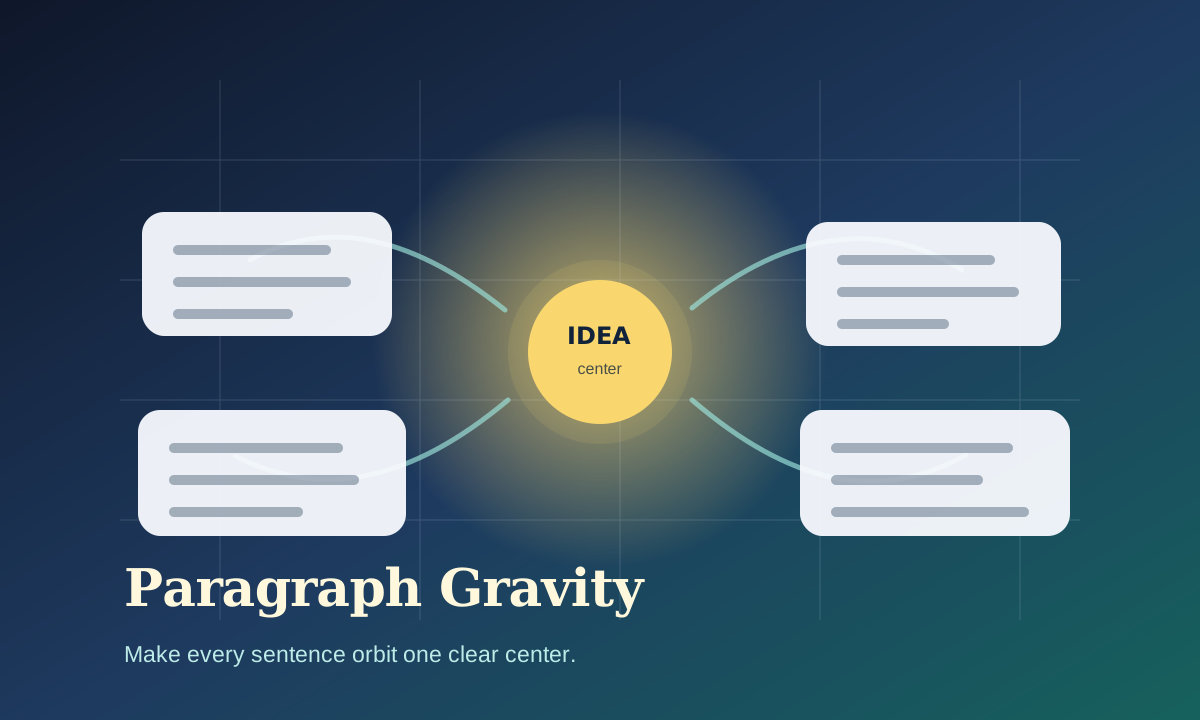
A strong paragraph has gravity. Every sentence feels pulled toward the same center. The details do not merely sit beside each other; they gather, turn, and land with enough force that the reader understands why the paragraph exists.
The Paragraph Is Not a Container
Many weak paragraphs fail because they are treated like storage boxes. The writer has several related sentences, so they place them together and move on. The sentences may share a topic, but they do not build a single movement.
A paragraph is not only a container for similar thoughts. It is a unit of pressure. It should make one move in the reader's mind.
That move might be an explanation, a contrast, a complication, a scene, an example, a question, or a turn. Whatever the move is, the paragraph should know it. If the paragraph does not know what it is doing, the reader has to do the organizing work alone.
Find the Center of Gravity
Before revising a paragraph, ask one plain question: what is this paragraph really about?
Not the general subject. The point.
A paragraph about sleep may really be about control. A paragraph about a book may really be about memory. A paragraph about productivity may really be about fear. Once you find the center, you can decide which sentences belong and which are only nearby.
Nearby is not enough. Good paragraphs are selective.
The First Sentence Makes a Promise
The opening sentence does not have to summarize everything, but it should create direction. It tells the reader what kind of attention is required.
Consider the difference between these two openings:
Writing is complicated.
Most messy drafts are not messy because the writer lacks ideas; they are messy because too many ideas are competing for the same paragraph.
The first sentence is broad. It may be true, but it does not create much gravity. The second sentence contains a pressure point. It tells the reader what problem the paragraph will examine.
A good first sentence gives the paragraph a job.
Each Sentence Should Change the Paragraph
A sentence earns its place when it changes the paragraph in some way. It clarifies, proves, complicates, narrows, expands, or turns.
If a sentence simply repeats the same idea in different clothing, the paragraph gets heavier without getting stronger. Repetition can be useful when it deepens emphasis, but accidental repetition drains energy.
During revision, move sentence by sentence and ask: what does this add that was not already here?
If the answer is nothing, cut it or make it work harder.
Use Examples as Anchors
Abstract paragraphs float. Examples give them weight.
If you write that a room felt tense, show the untouched cups, the careful voices, the way everyone checked their phones without reading anything. If you write that a process is inefficient, show the repeated approval email, the spreadsheet nobody trusts, the meeting that exists only because the previous meeting failed.
An example does not have to be long. Sometimes one specific detail anchors the whole paragraph.
Specificity is gravity.
The Middle Is Where Paragraphs Lose Shape
Openings and endings get attention. Middles often become mush.
The middle of a paragraph is where the writer may add a sentence because it sounds related, not because it advances the move. This is how paragraphs drift. One sentence explains, the next adds a mild example, the next introduces a new angle, the next softens the claim, and by the end the paragraph has become a hallway with too many doors.
To strengthen the middle, decide what kind of sequence the paragraph needs.
- Claim, then example.
- Problem, then consequence.
- Observation, then explanation.
- Expectation, then reversal.
- Abstract idea, then concrete image.
Sequence gives the paragraph movement. Movement gives the reader trust.
The Last Sentence Should Not Just Stop
A paragraph ending is not simply the place where the writer runs out of material. It should either land the idea or hand it forward.
Landing means the paragraph resolves its local movement. Handing forward means it creates the need for the next paragraph.
Weak endings often trail off into summary. Stronger endings sharpen the point, reveal the consequence, or create a turn.
If the ending feels limp, ask: what should the reader understand now that they did not understand six sentences ago?
Cut the Tourist Sentences
Every paragraph attracts tourist sentences: lines that visit the topic but do not live there.
They are often interesting. That is what makes them dangerous. A tourist sentence may be true, clever, or beautifully phrased, but if it does not belong to the paragraph's movement, it weakens the center.
Cutting these sentences can feel wasteful. Keep a separate document for them if needed. But do not let a paragraph become a museum of things you were reluctant to delete.
Try the One-Line Test
After drafting a paragraph, write one plain sentence beside it that begins: "This paragraph shows that..."
If you cannot finish the sentence, the paragraph may not have a center. If your one-line summary includes three separate ideas, the paragraph may need to split. If the summary is obvious but the paragraph takes too long to reach it, the paragraph may need compression.
The one-line test is not for readers. It is for you. It reveals whether the paragraph knows its own purpose.
Paragraphs Have Texture
Gravity is not only logical. It is rhythmic too.
A paragraph made of sentences that all share the same length and shape can feel airless. A paragraph that varies too wildly can feel scattered. The best paragraphs often combine control with variation: a longer sentence that gathers complexity, a shorter sentence that delivers force, a concrete detail after an abstract claim.
Read the paragraph aloud. If the rhythm never shifts, the reader may drift. If the rhythm shifts at the right moment, the paragraph wakes up.
When to Split a Paragraph
Sometimes a paragraph is weak because it is actually two paragraphs pretending to be one.
Split when the paragraph changes subject, changes scale, changes emotional register, or introduces a new claim that deserves its own development. A paragraph break is not only visual relief. It is a signal that the writer has made a turn.
Long paragraphs can work beautifully when the gravity is strong. Short paragraphs can fail when they are merely fragments. Length is less important than coherence.
A Revision Checklist
For any paragraph that feels soft, try this sequence:
- Underline the sentence that states or implies the center.
- Cut any sentence that does not add pressure, proof, contrast, or movement.
- Add one concrete detail if the paragraph floats.
- Check whether the first sentence makes a promise.
- Check whether the last sentence lands or hands forward.
- Read aloud for rhythm.
This is not a formula. It is a way to listen for weight.
The Point
Readers do not remember every sentence. They remember the feeling that the writing knew where it was going.
Paragraph gravity creates that feeling. It turns a group of sentences into a deliberate movement. It makes examples matter, transitions feel earned, and endings carry weight.
A paragraph should not merely occupy space. It should pull its weight.