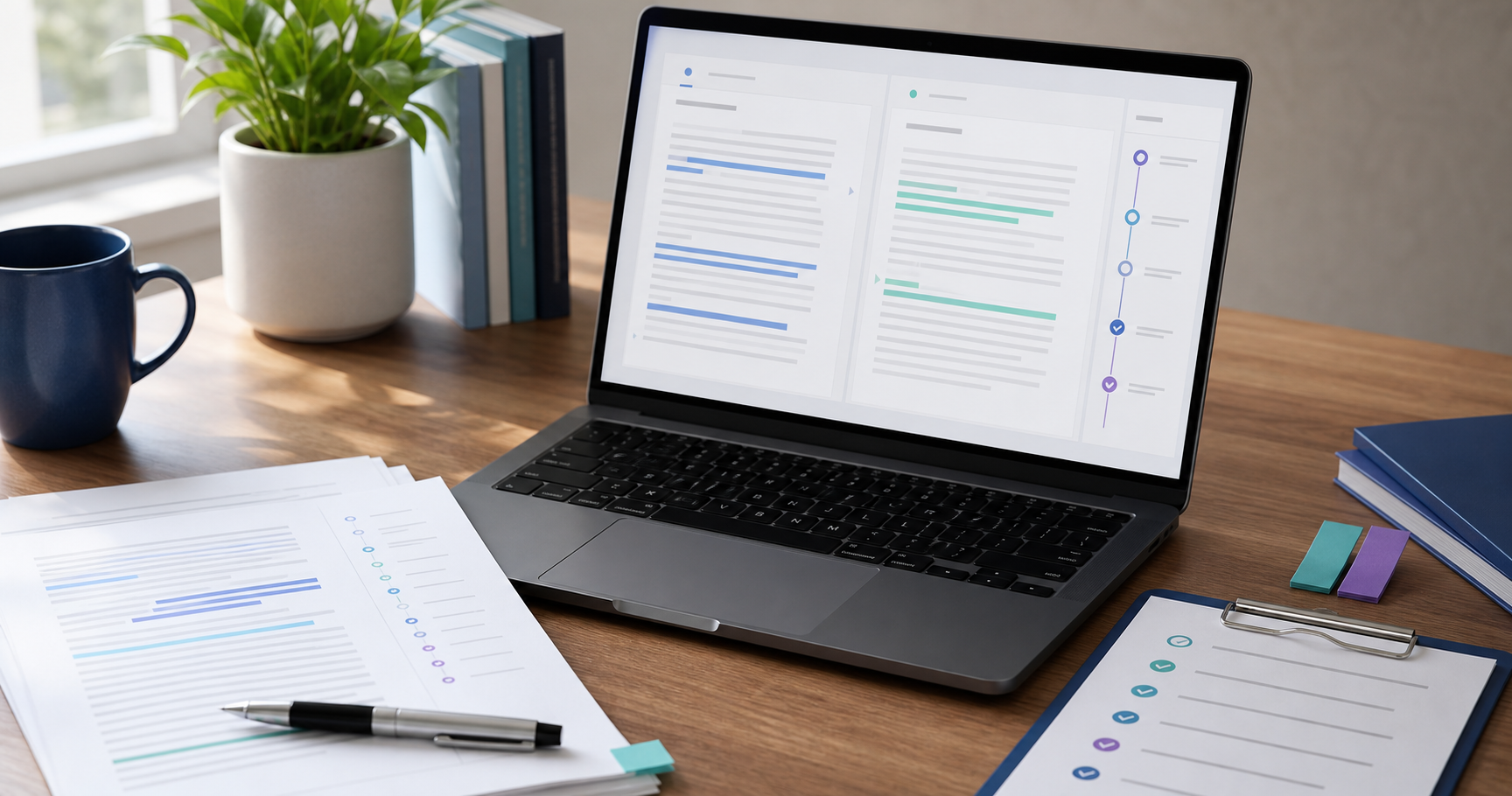
A change log pass helps AI-assisted writing become easier to trust by showing what was added, removed, checked, and kept under human judgment.
Polished Is Not The Same As Traceable
AI can make a draft cleaner very quickly.
It can tighten paragraphs, smooth transitions, replace awkward phrasing, and suggest a more confident structure. After a few rounds, the page may look finished.
But a polished draft can still leave an important question unanswered: what actually changed?
That question matters when the writing carries responsibility. A student may need to explain how a paper was revised. A marketer may need to show what claims were softened before publication. A support team may need to prove that product details were checked. A manager may need to know whether AI only edited tone or also changed meaning.
The change log pass is a final review step for AI-assisted writing. It records the meaningful edits before the draft leaves your hands.
This is not about confessing to every comma change. It is about making the human judgment visible enough that the work can be reviewed, defended, and trusted.
Start By Separating Surface Edits From Substance Edits
Not all changes carry the same risk.
Surface edits improve presentation. They fix grammar, shorten sentences, remove repetition, align tone, or make a paragraph easier to scan. These changes matter, but they usually do not alter the core meaning.
Substance edits change what the reader understands. They add a claim, remove a caveat, change a number, reframe a recommendation, insert an example, adjust a promise, or make the conclusion stronger than the evidence supports.
Your change log should identify substance edits first.
For example:
- Added a customer-support example to make the workflow concrete.
- Removed an unsupported claim about detector accuracy.
- Changed "always" to "often" because the advice depends on context.
- Added a limitation for academic and workplace policy settings.
- Kept the original thesis but rewrote the structure for clarity.
These notes help a reviewer understand the real editorial movement, not just the final wording.
Mark What AI Suggested And What You Accepted
AI suggestions can be useful, but they should not disappear into the final draft without judgment.
During the change log pass, look back at the edits and ask which changes came from AI assistance, which came from you, and which were rejected.
You do not need a legal transcript of the editing session. A practical note is enough.
"AI suggested a stronger opening, but I kept the original example because it matched the source material."
"AI proposed a broader claim about all detectors; I narrowed it to common detector behavior."
"AI tightened the conclusion; I removed one sentence that sounded more certain than the evidence allowed."
This habit changes the role of AI from hidden author to visible assistant. It also helps you notice when the model is pulling the draft toward generic confidence.
Log The Claims You Verified
The most important part of a change log is often not what changed. It is what was checked.
AI-assisted writing can introduce confident claims that feel plausible. A change log should record which high-risk points were verified before publication.
Examples:
- Checked pricing, feature names, and policy language against the current product page.
- Confirmed quoted statistics against the original source before keeping them.
- Removed a legal-sounding recommendation because it needed professional review.
- Verified that the example matches the actual workflow used by the team.
- Reviewed the final version for accidental promises the business cannot support.
These notes are useful even if no one else reads them. They force the editor to distinguish between "sounds right" and "has been checked."
Record The Limits You Added
One sign of responsible AI-assisted editing is the presence of limits.
AI drafts often prefer clean, universal advice. Real writing usually needs conditions: this works when, this does not apply if, check your policy first, verify the source, use human review before publication.
A change log should call out the limits you added because those limits are part of the human value of the edit.
For example:
"Added a note that detector scores should not be treated as proof of misconduct."
"Added a policy caveat for schools and workplaces with formal AI-use rules."
"Clarified that humanizing text should not mean hiding plagiarism or unsupported claims."
These are not small details. They are trust signals.
Use A Simple Four-Line Template
A useful change log does not have to be long.
For most drafts, four lines are enough:
- What changed: the main structural or meaning-level edits.
- What was checked: claims, sources, examples, product details, or policy-sensitive wording.
- What was rejected: AI suggestions or draft language you chose not to keep.
- What still needs review: any remaining uncertainty before publication.
That last line is especially important. If something still needs legal, academic, subject-matter, or brand review, write it down. A transparent unresolved note is better than silent confidence.
Keep The Log Close To The Draft
A change log only helps if it can be found.
Keep it in the document comments, the project management card, the pull request description, the CMS note, or the editorial handoff. Do not leave it buried in a chat thread that no one will search later.
If the draft is important, include the log where the next reviewer already works.
This makes the review faster. It also reduces repeated questions. A stakeholder can see that the claim was checked, the example was replaced, the scope was narrowed, and the remaining risk is known.
The Point Is Accountability, Not Theater
A change log should not become performative paperwork.
If it is too detailed, people will stop writing it. If it is too vague, it will not help anyone. The goal is a short, honest record of meaningful editorial judgment.
That record can protect the writer, the reviewer, and the reader.
It shows that AI helped, but did not decide everything.
It shows that claims were checked, not merely polished.
It shows that the final draft has an owner.
When AI-assisted writing is traceable, it becomes easier to trust for reasons that go beyond detector scores.
The reader does not only see a smooth page.
The team can see the decisions behind it.
That is what the change log pass is for.
Need A Cleaner Final Draft?
AI Undetectable helps turn AI-generated text into clearer, more natural writing while preserving the meaning and judgment you need to stand behind.
Try Free →