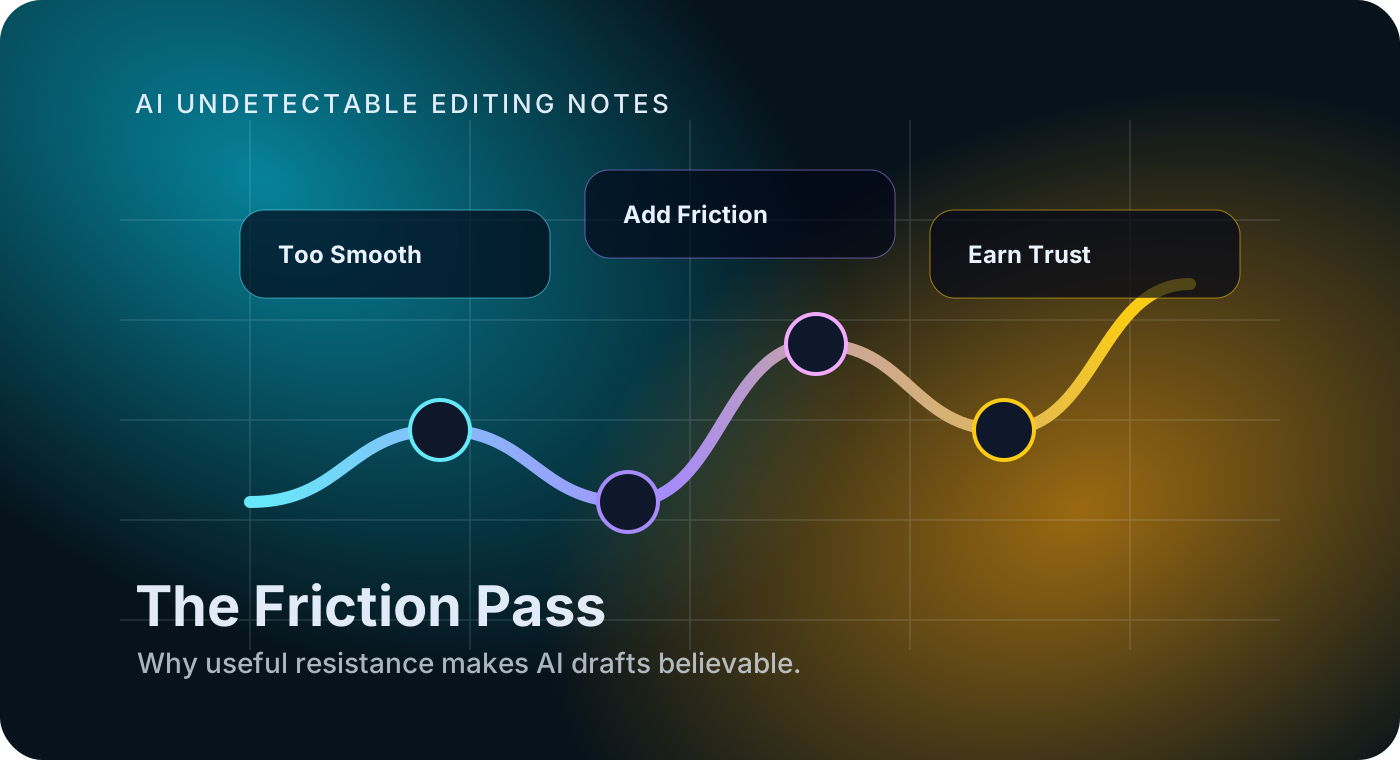
A lot of AI writing fails because it is too frictionless. It glides from point to point without showing struggle, choice, doubt, or judgment. The friction pass is the edit that gives a draft something to push against.
The Problem With Smoothness
AI drafts are often impressively fluent. The sentences connect. The headings are sensible. The introduction promises clarity, the body delivers orderly points, and the conclusion folds everything back into a tidy summary.
That smoothness can be useful for a first pass. It helps a writer get structure on the page. But when the draft remains too smooth, readers start to feel the absence of a person making choices.
Human writing usually contains productive resistance. A writer hesitates before a claim, chooses one example instead of another, admits a limitation, argues with a possible objection, or narrows a broad idea into something sharper. Those moments create trust because they show judgment.
What the Friction Pass Does
The friction pass is a revision step that asks: where should this draft stop gliding and start thinking?
It is not about making prose awkward. It is not about adding random sentence breaks, slang, or intentional mistakes. Useful friction is not mess. Useful friction is contact with complexity.
A friction pass adds moments where the piece has to earn its confidence. It introduces tradeoffs, examples, objections, constraints, and decisions. It makes the reader feel that the writer has tested the argument rather than simply generated a polished surface.
Four Places to Add Friction
Most AI-assisted drafts benefit from friction in four places.
- The claim: make it specific enough to be tested.
- The example: show the idea in a realistic situation.
- The objection: name what a skeptical reader might push back on.
- The choice: explain why this angle, recommendation, or detail matters more than another.
When those pieces are missing, the draft may still sound competent. But it will often feel weightless.
Before and After
Too smooth: AI writing tools can help teams create better content faster, but human editing is still important for quality.
With useful friction: AI writing tools can speed up the first draft, but they also tend to hide hard choices. A team may get five polished landing page sections and still have no answer to the real question: which customer fear should this page address first?
The second version is not just more colorful. It contains a problem. It asks the writing to make a choice. That small resistance gives the paragraph a reason to exist.
Friction Is Different From Randomness
Some people try to make AI text look more human by adding randomness. They shorten a sentence here, add a casual phrase there, swap a few words, and hope the rhythm feels less machine-made.
Randomness can make a draft less uniform, but it does not necessarily make it better. A weak argument with varied sentence lengths is still a weak argument. A generic paragraph with a joke in it is still generic.
Useful friction improves the thinking underneath the style. It asks the draft to handle pressure. It creates evidence that a human editor made decisions.
The Skeptical Reader Test
To begin the friction pass, imagine a skeptical but fair reader sitting beside the draft. This reader is not hostile. They simply refuse to be carried along by confident language.
They ask questions like:
- What exactly do you mean by this claim?
- Where would I see this happen in real life?
- When would this advice fail?
- What are you choosing not to discuss?
- Why should this paragraph be here instead of a sharper one?
Any paragraph that cannot survive those questions probably needs friction.
Add a Counterweight
AI drafts often lean too hard in one direction. They praise a tool without naming its limits. They criticize a problem without explaining why smart people still fall into it. They give advice without mentioning the cost of following it.
A counterweight is a sentence that keeps the piece honest.
For example: "This does not mean every AI-generated draft is shallow; it means fluency should not be mistaken for finished thinking."
That sentence adds balance. It prevents the argument from becoming a slogan. It also signals that the writer can hold more than one truth at a time.
Use Concrete Pressure
Abstract advice rarely creates enough friction. Concrete pressure does.
Instead of saying, "Add more detail," ask: what detail would change the reader's decision?
Instead of saying, "Make it more human," ask: what would someone know only after trying this?
Instead of saying, "Improve the flow," ask: where does the reader need a bridge because the idea actually changed direction?
Good friction is practical. It makes the paragraph answer for itself.
The Five-Minute Friction Pass
After an AI draft is complete, run this quick pass before polishing voice:
- Underline the three smoothest claims.
- Add one example that makes each claim visible.
- Add one fair objection or limitation.
- Replace one broad sentence with a decision the writer has to defend.
- Cut one paragraph that only repeats the premise in nicer language.
This pass usually makes a draft shorter, not longer. It removes filler confidence and replaces it with accountable thinking.
Why This Matters for Trust
Readers are becoming more sensitive to fluent emptiness. They may not know whether a passage came from an AI system, but they can feel when nothing has been risked. They can sense when the writer has not chosen, tested, doubted, or observed.
The friction pass helps because it moves the draft from performance to participation. The writing starts engaging with the reader's likely questions. It stops floating above the topic and starts touching the ground.
The Point
AI can produce smoothness very quickly. Smoothness is not the enemy, but it is not enough.
Before you publish an AI-assisted draft, ask where it needs useful resistance. Add the objection. Name the tradeoff. Show the example. Admit the limit. Make the claim specific enough to stand on its own feet.
That is how a draft stops sounding merely generated and starts sounding considered.