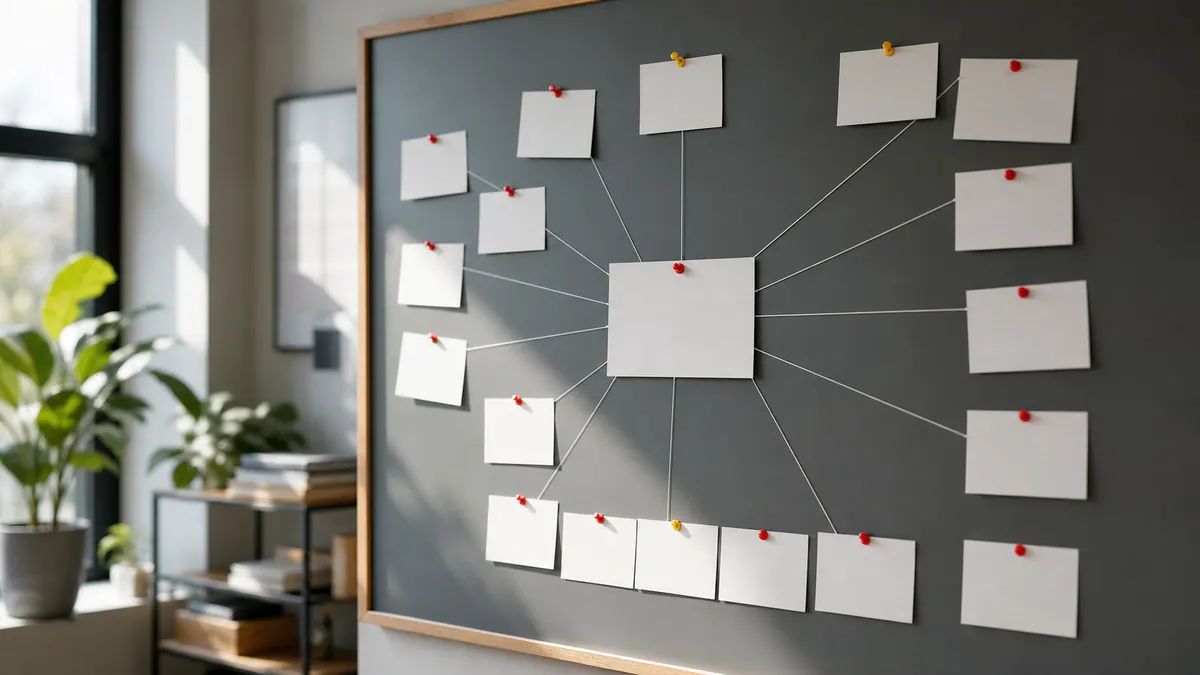
The premise lock pass keeps AI-assisted drafts tied to one clear point, so every section supports the same promise instead of drifting into polished but scattered advice.
AI-assisted drafts often fail in a way that looks harmless at first.
The paragraphs are clear. The transitions are smooth. The tone is confident. Each section seems useful on its own.
Then you read the whole piece and feel the problem: the draft has lost its center.
It began with one promise, then wandered into adjacent tips, related warnings, background explanations, and polished general advice. Nothing is obviously wrong. The issue is that the piece no longer knows exactly what it came to prove.
The premise lock pass is a review step for that problem.
It asks every section of an AI-assisted draft to answer one question: does this part still serve the central premise, or is it merely related to the topic?
A Topic Is Not A Premise
A topic is broad. It gives the draft an area to discuss.
A premise is narrower. It gives the draft a job.
"AI editing workflows" is a topic. "Every AI-assisted revision needs a human-readable reason before approval" is a premise.
"Better blog writing" is a topic. "A useful blog post should make one reader decision easier by the end" is a premise.
"Detector-safe writing" is a topic. "Chasing detector scores can make writing worse when it replaces evidence, voice, and judgment" is a premise.
AI tools are comfortable with topics. They can generate definitions, lists, pros and cons, examples, and conclusions around a topic very quickly.
But a finished draft needs more than coverage. It needs direction.
The premise lock creates that direction before the draft becomes too polished to question.
Write The Lock Sentence
Before revising, write one plain sentence that names the draft's promise.
It should be simple enough that a reviewer can hold it in mind while scanning the whole piece.
For example:
- This article shows editors how to keep AI revisions reviewable.
- This guide explains why examples make AI-assisted advice more trustworthy.
- This post helps teams prevent AI drafts from drifting away from the assignment.
The lock sentence is not a headline. It does not need to be clever. It is an internal control for the draft.
If the sentence contains three promises, split it. If it could apply to twenty different posts, narrow it. If it describes a topic but not a reader outcome, sharpen it.
A strong lock sentence tells you what belongs, what needs to be cut, and what needs to be rewritten so it serves the actual point.
Test Each Section Against The Lock
After the lock sentence is clear, move through the draft section by section.
For each section, ask:
- What job does this section perform for the premise?
- Would the argument weaken if this section disappeared?
- Is this section proving the point, preparing the point, complicating the point, or drifting from the point?
- Does the section end closer to the promise than it began?
These questions are useful because AI-generated sections can sound complete even when they are not necessary.
A section may define a term the reader already understands. It may add a general warning that belongs in another article. It may repeat the introduction in different language. It may offer a list because lists feel helpful, not because the argument needs one.
The premise lock does not punish useful material. It decides whether the material belongs in this draft.
Watch For Helpful Detours
The hardest sections to cut are often the helpful ones.
A paragraph may be accurate, clear, and interesting while still pulling the reader away from the central promise. AI tools produce these detours easily because they are trained to be broadly useful.
That broad usefulness can dilute a piece.
If a post promises to explain how to review AI-assisted claims, a long section about prompt engineering may be related but not essential. If a guide promises to help writers improve voice consistency, a broad explanation of AI detection may send the reader into a different problem. If a draft promises a practical editing workflow, a history of language models may slow the reader down without helping them act.
When you find a helpful detour, choose one of three moves:
- Cut it because the draft does not need it.
- Save it as a future post idea.
- Rewrite it so it directly supports the lock sentence.
The third option is often best when the section contains a useful idea but lacks a clear job.
Anchor Examples To The Same Promise
Examples are one of the best ways to make AI-assisted writing feel more grounded, but they can also create drift.
If each example points in a different direction, the reader starts to feel like the post is browsing the topic instead of building an argument.
The fix is to make examples answer the same underlying question.
Suppose the lock sentence is:
"This post helps editors keep AI-assisted drafts tied to one reader promise."
Then each example should show a different version of the same problem: a section that sounds useful but weakens the promise, a heading that introduces a side topic, a conclusion that summarizes too broadly, or a revision that pulls the draft back to the reader outcome.
The examples can vary. The purpose should not.
Use The Lock Before Final Polish
The premise lock pass belongs before final line editing.
If you polish first, the draft becomes emotionally harder to change. Smooth sentences create attachment. Clean transitions make weak structure look more intentional than it is. A polished detour may survive review because nobody wants to disturb it.
Run the premise lock while the draft is still flexible.
At that stage, cutting a section feels like improving the structure, not damaging finished copy. Moving a paragraph feels like restoring order, not undoing work. Rewriting a heading feels like clarifying the promise, not starting over.
After the lock pass, final polish becomes easier because the draft knows what it is trying to do.
What This Pass Improves
The premise lock pass improves three things.
First, it improves clarity. The reader can feel the piece moving toward one outcome instead of collecting related observations.
Second, it improves trust. A draft that stays tied to its promise feels more intentional. The reader senses that the writer is making choices, not just arranging fluent output.
Third, it improves editing speed. Reviewers do not have to ask whether every sentence is pleasant. They can ask whether every section serves the lock.
This is especially useful for AI-assisted drafts because fluency can hide drift.
The premise lock makes the center visible again.
It turns revision from a vague request to "make this better" into a sharper question: "Does this draft still do the one thing it promised to do?"
When the answer is yes, the writing does not just sound clean. It holds together.
Review Your Draft in One Workspace
Use AI Undetectable to evaluate writing patterns, revise awkward phrasing, and compare the result before you publish. Detector scores are signals, so keep the final factual and editorial review in human hands.
Open AI Humanizer