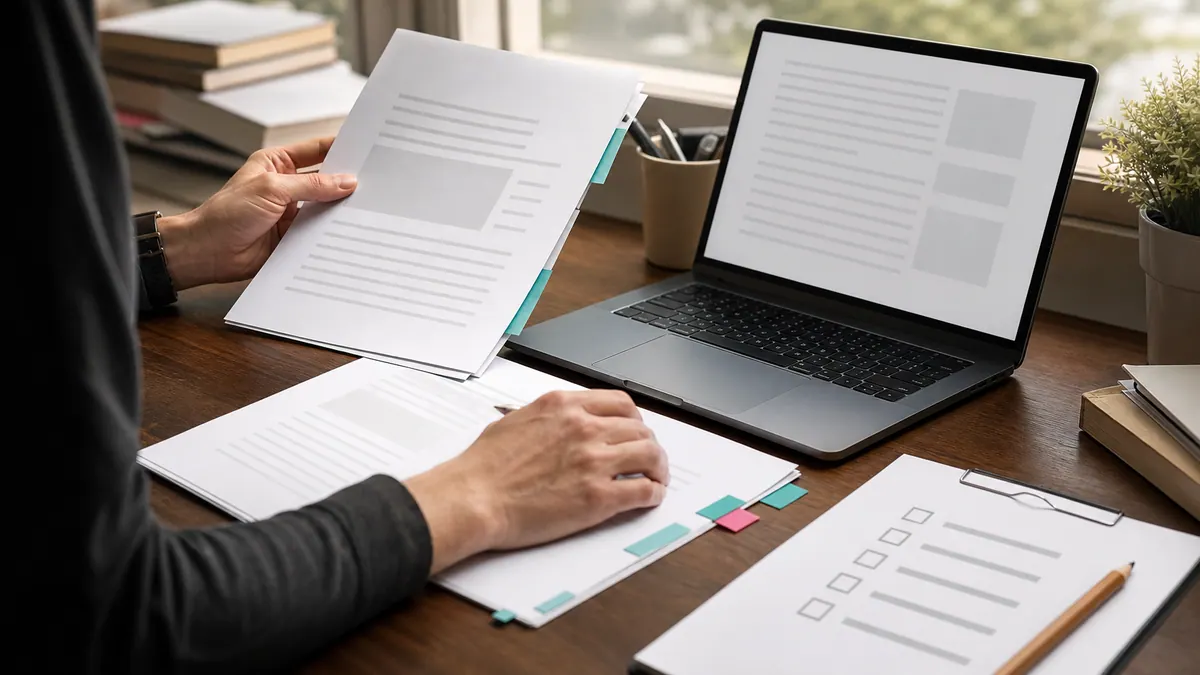
A reader test pass helps AI-assisted writing survive real attention by checking confusion, skepticism, missing context, and the places readers may stop trusting the draft.
The Draft Is Not Finished Until Someone Can Read It
AI-assisted drafts often look finished before they are actually ready.
The structure is tidy. The paragraphs are balanced. The transitions are smooth. The conclusion lands with confidence. If you only check the surface, the draft may seem publishable.
Then a real reader arrives.
They do not read like a model. They arrive with limited time, prior doubts, missing context, competing tabs, personal expectations, and a sharp instinct for sentences that sound confident without earning it.
That is why every serious AI-assisted draft needs a reader test pass.
This pass is not about hiding AI use. It is about making the draft clear, useful, and trustworthy when a human reader applies normal pressure to it.
Read For The Moment Trust Breaks
The reader test pass starts with one question:
Where would a reasonable reader stop trusting this?
Not where would an AI detector object. Not where would a grammar checker suggest a comma. Where would an actual person pause and think, "Wait, how do you know that?" or "This sounds too broad" or "I do not see how this applies to me."
Those moments are more important than style polish because they decide whether the reader keeps going.
Look for claims that arrive too quickly, advice that assumes too much, examples that feel generic, and paragraphs that sound complete but do not answer the reader's likely objection.
A sentence can be fluent and still lose trust.
Name The Reader Before You Edit
Generic writing often comes from editing for a generic audience.
Before you revise, name one real reader profile. A student worried about academic integrity. A marketer trying to revise a product page. A manager reviewing an AI-generated policy draft. A founder preparing a customer email. A teacher trying to understand whether a submission is trustworthy.
Once the reader is specific, the edit becomes sharper.
Ask what this reader already knows, what they are afraid of, what they will question, and what they need before they can act.
If the draft says, "Use specific examples to sound more human," the reader test asks, "Specific to whose situation?"
If the draft says, "Avoid generic language," the reader test asks, "Which generic sentence should be replaced, and what would a better one look like?"
If the draft says, "Review claims carefully," the reader test asks, "Which claims carry the most risk?"
Mark Confusion In The Margin
During the reader test pass, do not fix every sentence immediately.
First, mark the places where a reader may get confused.
- A term appears before it is explained.
- A recommendation arrives without a reason.
- A paragraph changes topic without warning.
- An example is too abstract to picture.
- A claim sounds universal when it only applies in some cases.
- The draft asks for trust before offering support.
These marks are useful because AI-assisted drafts often hide confusion under smooth prose. The writing flows, but the reader's understanding does not.
Once the confusion points are visible, the edit becomes practical. Add a definition. Move the example earlier. Split the claim. Add a caveat. Replace the vague noun with the actual thing.
Test The Examples For Weight
Examples are where many AI drafts reveal their weakness.
A model can produce examples that sound plausible but do not feel observed. They are often too clean, too universal, or too convenient. A reader may not be able to prove the example is weak, but they can feel when it has no weight.
During the reader test pass, ask whether each example could have come from a real situation.
Does it include a constraint?
Does it include a tradeoff?
Does it show the reader something they could recognize?
Instead of "a business can use AI to improve content quality," try a more testable version: "A support team can use AI to draft the first version of a help article, then require a human editor to verify product steps, screenshots, release dates, and customer-impact claims before publishing."
The second version is not just more human-sounding. It is easier to evaluate.
Read The Draft Against The Reader's Objections
A helpful article does not need to answer every possible objection, but it should anticipate the obvious ones.
For AI-assisted writing, common reader objections include:
- Is this claim supported?
- Does this advice apply to my situation?
- What could go wrong if I follow it?
- Is this trying to sound certain because it lacks evidence?
- Where is the human judgment?
Use those objections as an editing checklist.
If a paragraph cannot survive one of them, revise it before polishing the language. Add the missing limit. State the condition. Make the example concrete. Remove the claim if it cannot be supported.
This is the kind of editing that makes AI-assisted writing feel less disposable. It shows that a person has taken responsibility for the final draft.
Do A Cold First-Screen Test
Readers decide quickly whether a page is worth their attention.
Before publishing, look only at the title, opening paragraph, image, category, and first visible section. Ask what promise the page is making.
Then ask whether the draft starts paying off that promise immediately.
If the title promises a practical editing pass, the opening should not spend five paragraphs explaining that AI is changing writing. If the article promises a workflow, the reader should see the shape of that workflow early. If the page promises trustworthy guidance, the first screen should not rely on vague urgency or exaggerated claims.
The reader test pass is partly an attention test. It respects the fact that readers do not owe the draft patience.
Use AI As A Reader, Then Edit Like An Owner
AI can help with the reader test pass if you give it the right role.
Ask it to act as a skeptical reader, a confused first-time visitor, a busy manager, or a cautious editor. Ask it to list the points where it would need more evidence, clearer context, or a better example.
But do not outsource the final judgment.
The model can surface possible reader reactions. You decide which reactions matter, which claims stay, which examples are real enough, and which limits belong in the final piece.
That ownership is what separates responsible AI-assisted writing from polished output.
Before You Publish, Make The Reader Visible
A strong final pass should make the reader visible in the draft.
The introduction should know what the reader came for. The examples should match the reader's world. The caveats should answer the reader's likely doubts. The conclusion should leave them with a next step they can actually use.
That is the real value of the reader test pass.
It turns the question from "Does this sound human?" into "Does this help a human reader trust, understand, and use the piece?"
When the answer is yes, the writing becomes stronger for reasons no detector score can fully measure.
It has been tested against attention.
It has been edited for doubt.
It has been shaped for someone real.
Need A Stronger AI-Assisted Draft?
AI Undetectable can help turn flat AI text into clearer, more natural writing while preserving the meaning and judgment you need to keep.
Open AI Humanizer