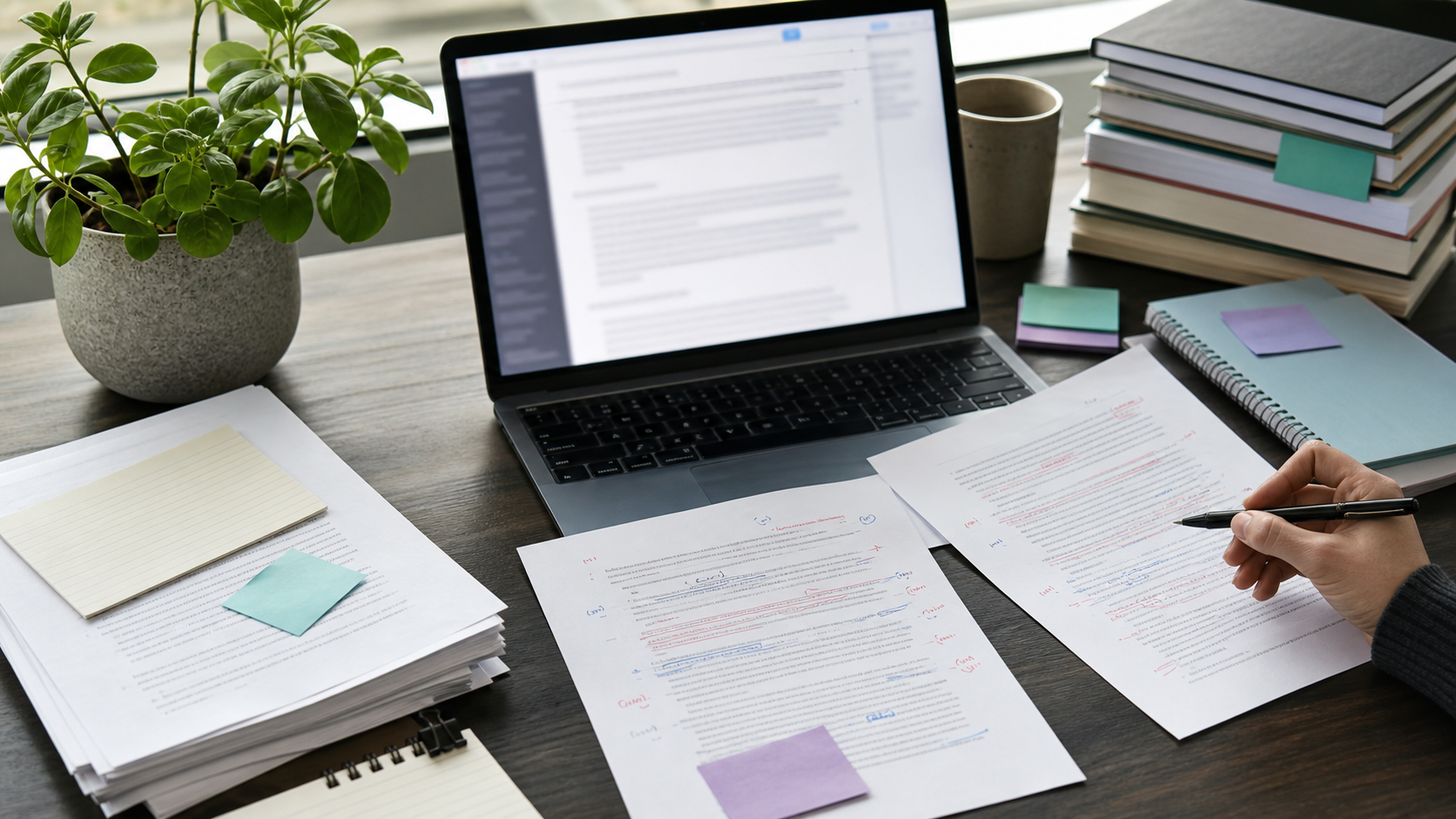
A skeptical reader pass makes AI-assisted writing more credible by revising for doubts, missing proof, and the moments where trust usually breaks.
Readers Do Not Only Read For Style
Many AI-assisted drafts are edited as if style is the main problem.
The writer looks for repeated words, stiff phrasing, predictable transitions, and sentences that sound too smooth. Those checks matter. A draft that reads like a template will lose attention quickly.
But style is not the only reason readers stop trusting a piece.
Readers also notice when a claim arrives too easily, when a recommendation skips the hard part, when an example feels generic, or when the article seems to be answering an imaginary audience instead of the real one in front of it.
That is where the skeptical reader pass helps.
Instead of asking, "Will this sound human enough?" it asks, "Where would a thoughtful reader hesitate, doubt, or want proof?"
Start With The Reader Who Wants To Believe You
Skeptical does not mean hostile.
A good skeptical reader is not looking for excuses to reject the draft. They want the piece to be useful, but they will not give it trust for free.
Imagine someone who has opened your article with a practical problem. They are busy, informed enough to recognize vague advice, and tired of content that promises more than it proves.
They are willing to keep reading if the piece respects their doubts.
That reader may be asking:
- Is this true in my situation?
- What evidence supports this claim?
- What does this advice look like in practice?
- What are the tradeoffs?
- What is the author leaving out?
The skeptical reader pass is a way to answer those questions before the reader has to ask them alone.
Mark Every Place Trust Has To Jump
Read the draft once and mark every sentence where the reader has to make a leap.
A trust jump happens when a paragraph moves from claim to conclusion without enough support.
For example:
"AI writing tools can improve productivity while preserving quality."
That may be true, but it asks the reader to accept several hidden steps. Which writing tools? Which work? What kind of quality? How is quality preserved? Who reviews the output?
A revised version might say:
"AI writing tools can speed up first drafts when a human editor still owns the examples, accuracy checks, and final judgment. The productivity gain comes from getting material on the page faster, not from skipping review."
The second version gives the reader a limit. It explains where the benefit comes from and where it does not.
Trust often grows when a draft stops trying to sound universally correct.
Turn Vague Benefits Into Visible Tests
AI-assisted drafts often lean on broad benefits: better quality, more engagement, stronger communication, improved credibility, natural voice.
These phrases are not wrong. They are just too easy to say.
During the skeptical reader pass, convert broad benefits into visible tests.
Instead of:
"This process creates more trustworthy content."
Try:
"After the edit, a reader should be able to point to the source behind each major claim, see one concrete example of the advice in use, and understand the condition where the recommendation would not apply."
Now the benefit has a standard.
This also makes the draft easier to improve. If the standard is visible, you can check whether the article meets it.
Add The Objection Before The Reader Leaves
One of the strongest signs of human judgment is knowing where your own argument can be questioned.
That does not mean weakening every paragraph with caveats. It means putting the most likely objection in the place where it naturally belongs.
If you recommend using AI for customer support drafts, acknowledge that sensitive tickets still need careful human review.
If you recommend using AI to summarize research, say that summaries should be checked against the original sources before they shape a conclusion.
If you recommend a humanizer workflow, clarify that better phrasing does not replace accuracy, permission, or academic integrity.
This kind of objection handling is not defensive. It is respectful.
It tells the reader, "I know the simple version is not enough."
Check For Unsupported Specificity
Specificity is useful, but not all specificity is evidence.
An AI draft may include numbers, tool names, dates, or confident examples that look precise but are not actually supported. A skeptical reader will notice when the precision feels decorative.
During this pass, ask of every specific claim:
- Do we know this is true?
- Can the reader verify it?
- Does this detail come from a source, a real workflow, or the writer's experience?
- Would the paragraph still work if this detail were removed?
If a detail is not grounded, either source it, soften it, or replace it with a concrete but honest example.
The goal is not to make the draft less specific. The goal is to make its specificity accountable.
Revise The Ending For Responsibility
AI-assisted drafts often end with an oversized conclusion.
They announce that a tool, tactic, or workflow will transform everything. The ending tries to leave the reader energized, but it can sound less credible than the body of the article.
A skeptical reader pass checks whether the ending earns its confidence.
Instead of ending with, "This approach will revolutionize your writing process," try a more responsible close:
"This approach will not make every draft publication-ready. It will give editors a clearer way to find weak claims, missing proof, and generic advice before readers do."
That ending is smaller, but stronger. It tells the truth about what the method can actually do.
A Simple Checklist
Before publishing an AI-assisted draft, run this short skeptical reader checklist:
- Where does the draft ask the reader to trust a claim too quickly?
- Which broad benefit needs a concrete test?
- What objection would a careful reader raise first?
- Which specific detail needs a source, limit, or softer wording?
- Does the conclusion promise only what the article has actually shown?
If you can answer those five questions, the draft will usually feel more human for the right reason: not because it imitates quirks, but because it shows judgment.
Trust Beats Stealth
It is tempting to edit AI writing only around detection risk. But real readers are not detectors. They do not score perplexity and burstiness in a dashboard. They notice whether the writing respects their intelligence.
The skeptical reader pass shifts the goal from hiding the origin of the draft to improving the quality of the argument.
That is a better standard.
When a piece names its limits, supports its claims, answers likely doubts, and gives examples that survive contact with real work, it becomes harder to dismiss.
Not because it is sneaky.
Because it is more useful.
Need a Cleaner AI-Assisted Draft?
AI Undetectable can help turn flat AI text into clearer, more natural writing while preserving the meaning you need to keep.
Try Free →